Does California Have an Estate Tax? Complete Guide to Inheritance & Estate Taxes
March 19, 2026

Does California Have an Estate Tax?
Here’s the straightforward answer: No, California does not have a state-level estate tax, inheritance tax, or death tax. California is one of 38 states that does not impose any form of state estate or inheritance tax on its residents.
This means that when a California resident passes away, their estate will not owe any taxes to the State of California based solely on the transfer of assets to heirs. However, this does not mean California residents are completely free from estate-related taxation. The federal estate tax still applies to estates exceeding certain thresholds, and California has its own property tax transfer rules that can significantly impact inherited real estate.
Understanding these distinctions is critical for effective estate planning, especially for families throughout California in Clovis, Madera, and Solvang who want to protect their wealth for future generations.
Estate Tax vs. Inheritance Tax: Understanding the Difference
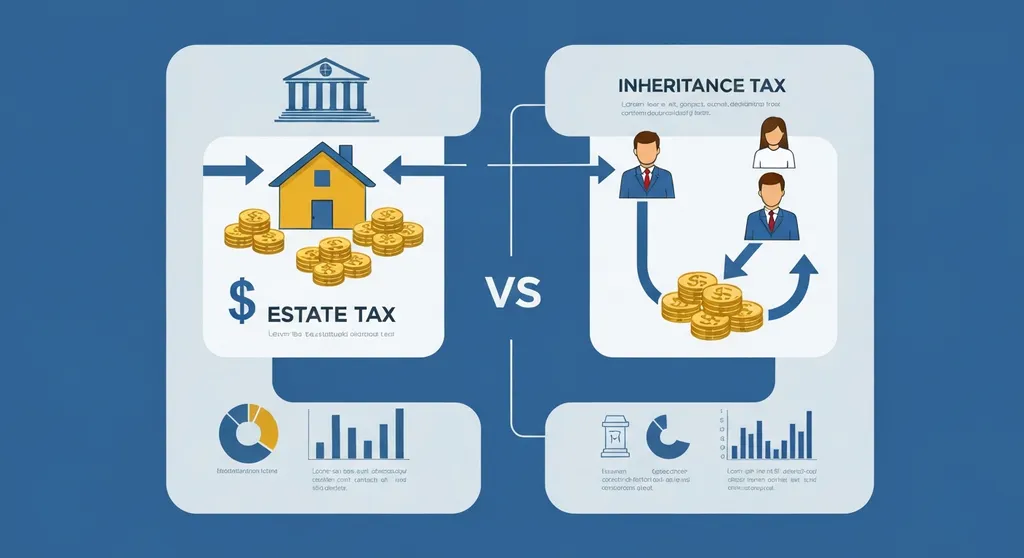
Many people use the terms “estate tax,” “inheritance tax,” and “death tax” interchangeably, but they are distinct concepts under tax law:
Estate Tax
An estate tax is levied on the deceased person’s estate before assets are distributed to beneficiaries. The tax is calculated based on the total fair market value of all assets owned at death. The estate itself is responsible for paying this tax. Under federal law, the estate tax is governed by Internal Revenue Code (IRC) §2001–§2210.
Inheritance Tax
An inheritance tax is paid by the individual who receives the inheritance. The tax rate often depends on the relationship between the deceased and the beneficiary. Closer relatives (spouses, children) typically pay lower rates or are exempt entirely. California does not impose an inheritance tax. However, six states currently do: Iowa, Kentucky, Maryland, Nebraska, New Jersey, and Pennsylvania.
Death Tax
“Death tax” is a colloquial term that can refer to either an estate tax or inheritance tax. It is not a formal legal term but is commonly used in public discourse. California has no death tax of any kind at the state level.
| Feature | Estate Tax | Inheritance Tax |
|---|---|---|
| Who Pays | The deceased’s estate | The individual heir/beneficiary |
| Based On | Total estate value | Amount each heir receives |
| California State Level | None | None |
| Federal Level | Yes (estates over $15M in 2026) | No federal inheritance tax |
| Tax Rate Range | 18%–40% (federal) | Varies by state (1%–18%) |
Federal Estate Tax: What California Residents Need to Know
While California doesn’t impose a state estate tax, the federal estate tax applies to all U.S. residents regardless of which state they live in. Here’s what you need to understand:
Current Federal Estate Tax Exemption
For 2026, the federal estate tax exemption is $15 million per individual (or $30 million for married couples using portability under IRC §2010(c)). This means estates valued below these thresholds owe zero federal estate tax.
Lawvex's California guidance on California estate and inheritance taxes is now clear and current.
The federal estate tax rate on amounts exceeding the exemption ranges from 18% to 40%, with the top rate applying to taxable estates over $1 million above the exemption amount (IRC §2001(c)).
The Estate Tax Sunset Is Gone: What This Means for Your Plan
The Tax Cuts and Jobs Act (TCJA) of 2017 temporarily increased the federal estate tax exemption. The One Big Beautiful Bill Act (OBBBA), signed into law on July 4, 2025 as Public Law 119-21, permanently eliminated the TCJA estate tax sunset. The higher exemption is now in effect and continues to increase with inflation.
For 2026, the federal estate tax exemption is $15 million per individual and $30 million for married couples using portability under IRC §2010(c). This change is permanent and indexed for inflation, meaning the exemption amount will continue to increase each year based on IRS inflation adjustments.
What this means for California families: Most California families will not owe federal estate tax because their estates fall below the $15 million individual threshold. Families with larger estates should review their plan with an attorney because federal tax law and California property-tax rules still require careful coordination.
How the Federal Estate Tax Is Calculated
The federal estate tax calculation involves several steps under IRC §2031–§2046:
- Gross estate valuation — All assets are valued at fair market value on the date of death (or alternate valuation date under IRC §2032), including real property, bank accounts, investments, retirement accounts, life insurance proceeds, and business interests.
- Allowable deductions — The estate deducts funeral expenses, debts, administrative costs, charitable bequests (IRC §2055), and the unlimited marital deduction (IRC §2056).
- Taxable estate — Gross estate minus deductions equals the taxable estate.
- Unified credit application — The applicable exclusion amount ($15M in 2026) offsets the tax, so only amounts above the exemption are taxed.
California Property Tax Transfer Rules: Proposition 19
While California does not have an estate or inheritance tax, the state’s property tax reassessment rules can have a significant financial impact on inherited real estate. This is governed primarily by Proposition 19, which California voters approved in November 2020 and took effect on February 16, 2021.
How Proposition 19 Changed Property Tax Transfers
Before Proposition 19, California’s Proposition 58 (1986) allowed parents to transfer their primary residence and up to $1 million in other real property to their children without triggering a property tax reassessment. This was a significant benefit that allowed families to inherit property with the parent’s lower Proposition 13 tax base.
Proposition 19 significantly restricted these benefits. Under current law (California Revenue and Taxation Code §63.2):
- Primary residence only: The parent-child exclusion now applies only to a primary residence (not investment properties, vacation homes, or commercial properties).
- Must be the child’s primary residence: The inheriting child must use the property as their own primary residence within one year of transfer and file for the homeowners’ exemption.
- Value limit: If the property’s current fair market value exceeds the factored base year value by more than $1 million, the assessed value is adjusted upward by the amount over $1 million.
- Investment properties reassessed: Any inherited property that is not used as the child’s primary residence will be reassessed to current fair market value, often resulting in dramatically higher property taxes.
Real-World Impact for families throughout California
Consider a family home in Clovis purchased in 1990 for $150,000, now worth $550,000. Under the original Proposition 13 assessment, annual property taxes might be approximately $2,000. After reassessment to current market value under Proposition 19, property taxes could jump to approximately $6,100 per year — a threefold increase.
For families in Madera and Solvang with long-held properties, this reassessment can make inherited real estate financially burdensome if proper planning is not in place.
Step-Up in Basis: A Major Tax Advantage for California Heirs
One of the most significant tax benefits available to heirs is the step-up in basis under IRC §1014. This provision adjusts the cost basis of inherited assets to their fair market value on the date of the decedent’s death.
How the Step-Up in Basis Works
When you inherit an asset, your “basis” (the value used to calculate capital gains when you sell) is “stepped up” to the asset’s fair market value at the time of the decedent’s death rather than the original purchase price.
Example: A parent purchased stock for $50,000 that is worth $500,000 at death. If the parent had sold during their lifetime, they would owe capital gains tax on the $450,000 gain. However, when the child inherits the stock, their basis becomes $500,000. If they sell immediately, they owe zero capital gains tax.
This benefit applies to virtually all inherited assets, including:
- Real estate (homes, investment properties, land)
- Stocks, bonds, and mutual funds
- Business interests and partnership shares
- Collectibles and personal property
Community Property Double Step-Up
California is a community property state, which provides an additional advantage. Under IRC §1014(b)(6), when one spouse dies, both halves of community property receive a step-up in basis — not just the deceased spouse’s half. This is a significant benefit compared to common law states, where only the deceased spouse’s share receives a step-up.
For a couple who purchased their Clovis home for $200,000 decades ago, with the home now worth $600,000, the surviving spouse’s basis in the entire property becomes $600,000 — meaning they could sell with minimal or zero capital gains tax.

Strategies to Minimize Estate Taxes in California
Even though California has no state estate tax, proactive estate planning can help minimize federal estate tax exposure, reduce property tax impacts, and protect family wealth. Here are the most effective strategies:
1. Revocable Living Trusts
A revocable living trust is the cornerstone of California estate planning. While it does not directly reduce estate taxes (trust assets are still included in the taxable estate under IRC §2038), it provides essential benefits:
- Probate avoidance — Trust assets bypass California’s costly and time-consuming probate process, which can take 12–18 months and cost 4–7% of the estate value under California Probate Code §10800–§10810.
- Privacy — Unlike wills, trusts are not public record.
- Incapacity planning — The successor trustee can manage assets if the grantor becomes incapacitated.
- Flexible distribution — Assets can be distributed according to specific conditions and timelines.
2. Irrevocable Life Insurance Trusts (ILITs)
Life insurance proceeds are included in the taxable estate if the deceased owned the policy (IRC §2042). An irrevocable life insurance trust (ILIT) removes the policy from the estate by transferring ownership to the trust. This can be particularly effective for high-net-worth families whose estates may exceed the federal exemption.
Key considerations:
- The transfer must be completed at least three years before death to avoid inclusion under IRC §2035.
- The trust must be irrevocable — the grantor cannot retain any “incidents of ownership.”
- Annual premium payments can qualify for the gift tax annual exclusion using Crummey withdrawal powers.
3. Annual Gift Tax Exclusion
Under IRC §2503(b), individuals can gift up to $18,000 per recipient per year (2024) without incurring gift tax or reducing their lifetime exemption. Married couples can combine their exclusions to gift $36,000 per recipient annually.
A systematic gifting strategy over several years can transfer substantial wealth outside the taxable estate. For example, parents with three children and three grandchildren could transfer up to $216,000 per year ($36,000 × 6 recipients) completely tax-free.
4. Charitable Planning
Charitable giving provides both income tax deductions during life and estate tax reductions at death. Common charitable estate planning tools include:
- Charitable Remainder Trusts (CRTs) — Provide income to beneficiaries for a term of years, with the remainder going to charity. Removes assets from the estate and provides an income tax deduction (IRC §664).
- Charitable Lead Trusts (CLTs) — Provide income to a charity for a set period, with the remainder passing to family members at reduced gift or estate tax values.
- Donor-Advised Funds — Allow immediate charitable deductions while distributing funds to charities over time.
- Direct charitable bequests — Estate tax deduction under IRC §2055 for any amount left to qualified charities.
5. AB Trust Planning (Bypass Trusts)
For married couples with estates approaching the federal exemption threshold, AB trust planning can help preserve both spouses’ exemptions. Upon the first spouse’s death, assets up to the exemption amount fund an irrevocable “B trust” (bypass trust), while remaining assets pass to the surviving spouse’s “A trust.”
This strategy remains useful for married couples with estates approaching the federal exemption threshold because it can help preserve both spouses’ exemptions and coordinate portability.
6. Qualified Personal Residence Trust (QPRT)
A QPRT allows homeowners to transfer their residence to an irrevocable trust while retaining the right to live there for a specified term. At the end of the term, the property passes to beneficiaries at a significantly reduced gift tax value. This can be an effective tool for transferring high-value California real estate out of the taxable estate.
When to Consult an Estate Planning Attorney
While California’s lack of a state estate tax is welcome news, effective estate planning requires professional guidance, especially given the complexity of federal tax law and California property rules. You should consult an estate planning attorney if:
- Your estate approaches the federal exemption threshold — Even with the current $15 million exemption, professional advice can help coordinate federal tax planning with California property-tax rules.
- You own real property in California — Proposition 19 has dramatically changed how property taxes work for inherited real estate. Proper planning can help mitigate reassessment impacts.
- You have a blended family — Second marriages, stepchildren, and children from multiple relationships create complex inheritance scenarios.
- You own a business — Business succession planning involves unique estate tax considerations, including special valuation rules under IRC §2032A and installment payment provisions under IRC §6166.
- You want to maximize the step-up in basis — Strategic asset titling and trust structuring can optimize the step-up in basis for your heirs.
- You have charitable giving goals — Integrating charitable planning with estate planning can achieve philanthropic objectives while reducing tax exposure.
- Federal tax law still requires review — The OBBBA made the higher exemption permanent, but families should revisit their plan as assets, family circumstances, and laws change.
At Lawvex, we help families throughout California in Clovis, Madera, and Solvang navigate these complex tax and estate planning issues with transparent pricing and a modern, compassionate approach. Our team can evaluate your specific situation and develop a customized estate plan that protects your family’s wealth for future generations.
Frequently Asked Questions
Does California have a death tax?
No. California does not impose any state-level death tax, estate tax, or inheritance tax. California repealed its state estate tax (known as the “pick-up tax”) in 2005 after federal changes eliminated the state death tax credit. However, California residents may still be subject to the federal estate tax if their estate exceeds the federal exemption threshold.
Do I have to pay taxes on an inheritance in California?
California does not tax inheritances. You will not owe California state income tax or inheritance tax on assets you receive from a deceased person’s estate. However, certain inherited assets may generate taxable income (such as distributions from inherited IRAs under the SECURE Act), and inherited property may be subject to property tax reassessment under Proposition 19.
What is the federal estate tax exemption for 2026?
The federal estate tax exemption is $15 million per individual for 2026. Married couples can effectively shield up to $30 million using portability. The OBBBA permanently eliminated the TCJA estate tax sunset, and the exemption is indexed for inflation.
How does Proposition 19 affect inherited property in California?
Proposition 19 limits the parent-child property tax transfer exclusion to primary residences only, and only if the child uses the property as their own primary residence. Investment properties, vacation homes, and commercial properties inherited from parents will be reassessed to current fair market value, potentially resulting in significantly higher property taxes.
What is a step-up in basis and why does it matter?
A step-up in basis adjusts the cost basis of inherited assets to their fair market value at the date of death. This eliminates capital gains tax on any appreciation that occurred during the decedent’s lifetime. In California, as a community property state, both halves of community property receive a step-up when one spouse dies, doubling the benefit.
Disclaimer: This article is provided for educational and informational purposes only and does not constitute legal or tax advice. Tax laws are complex and subject to change. The information in this article reflects federal and California law as of the publication date. Individual circumstances vary, and you should consult a qualified estate planning attorney and tax professional before making any decisions based on this information. Lawvex is a California law firm. Contact us to schedule a consultation.