Can an LLC Own a Trust? A California Business Owner Guide
July 22, 2026

A business owner in California often loses control of their company to probate court after an unexpected death. A custom living trust keeps your business running and prevents family conflict. Contact Lawvex to schedule a free consultation and secure your business legacy today.
Asking can an llc own a trust reveals a common misconception because a trust usually holds the membership interest in the LLC. Proper retitling of your business assets into a living trust is a core component of avoiding probate and securing family wealth. This standard estate planning strategy ensures complete business continuity and protects your family from expensive, public probate court supervision. According to California business entity studies, transferring these interests to your trust keeps your business running smoothly when life becomes uncertain. The legal team at Lawvex can help you organize your business and personal assets into one protective, drama-free plan. This tailored approach integrates your business interests to preserve your hard-earned legacy for future generations.
Lawvex’s California guidance on whether an LLC can own a trust in California is now clear and current.
Many California business owners wonder which entity should hold the other to gain the best legal protection and tax benefits. Let us clarify this important question by exploring Can an LLC Own a Trust, or Should a Trust Own Your LLC? The distinction begins with:
Can an LLC Own a Trust, or Should a Trust Own Your LLC?
Answer in brief: No, a Limited Liability Company (LLC) cannot own a trust. In California, a trust is a legal setup, not an entity that can be owned. But your California living trust can own the membership interests of your LLC as an asset. This standard estate planning move keeps your business running and keeps your heirs out of probate court.
The core legal distinction
Often, California business owners ask if business entity ownership in trust planning can go both ways. They want to know: can an llc own a trust? The short answer is no. An LLC is a business entity that owns assets, while a trust is a set of rules for how to manage assets.
An LLC cannot hold a trust, because a trust is not an asset you can buy or sell. An LLC is meant to protect you from business liability. A trust is meant to pass your wealth to your heirs. Mixing up these two roles can lead to major estate planning mistakes.
Direction of ownership and why it matters
Instead of the business owning the trust, the trust should own your business. A trust can hold membership interests in a Limited Liability Company (LLC) as an asset in California. The legal team at Lawvex can help you set up this structure. When your trust owns your LLC, you still manage the business as you do now.
But if you pass away, your successor trustee steps in to run the business without delay. This stops a sudden halt in your daily business tasks. It also protects your workers, your clients, and your brand. Your heirs can keep getting the rewards of your hard work without a gap.
| Comparison Criteria | LLC Owns Trust (Incorrect) | Trust Owns LLC (Correct) |
|---|---|---|
| Legal validity | Invalid under California law | Fully valid and standard |
| Probate avoidance | Fails to avoid probate | Avoids probate for business |
| Business continuity | Operations halt on death | Successor takes over fast |
| Setup difficulty | Impossible to complete | Simple with proper documents |
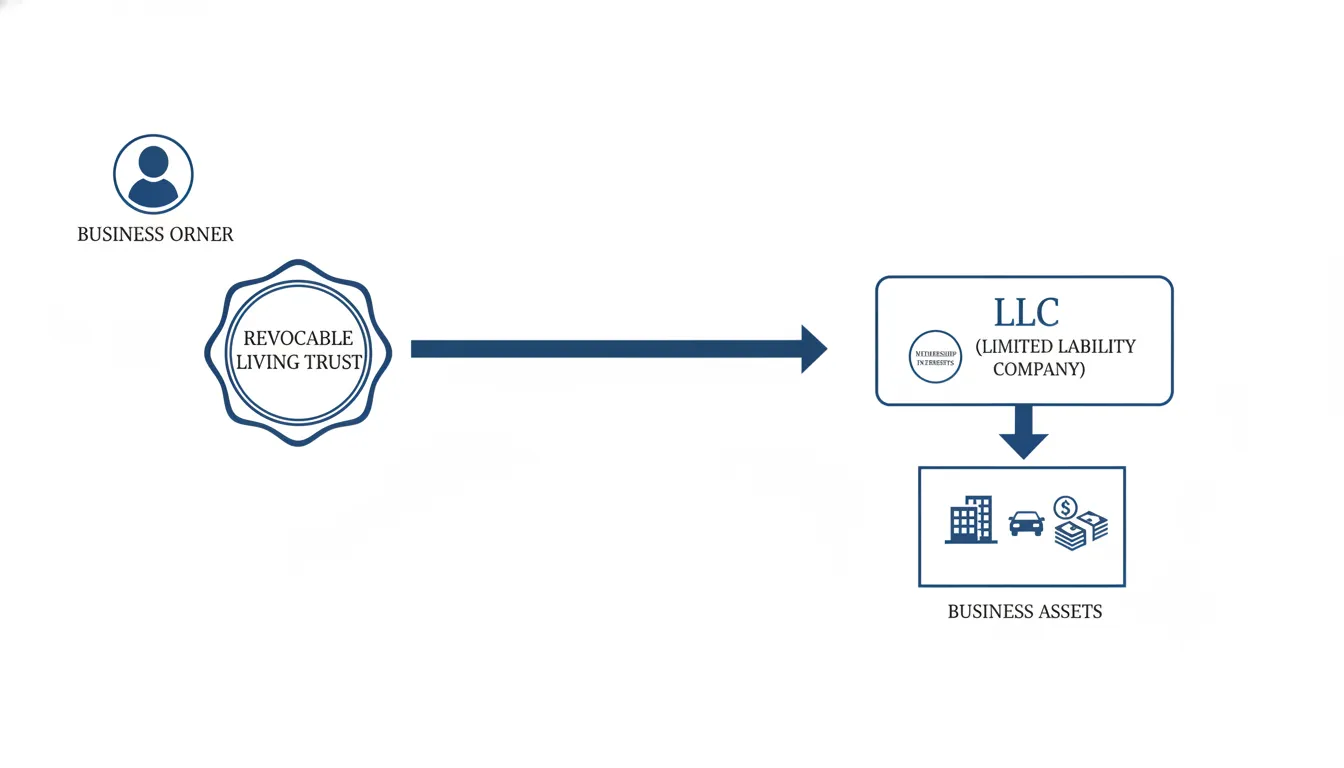
Estate plan structure with Lawvex
Getting the path of ownership right is vital for California business owners. Under California business entity laws, you can transfer your LLC interests to your trust with the right papers. This transfer must align with your LLC operating agreement. Lawvex lawyers see this mistake often, and it can cause major legal issues down the road.
The legal team at Lawvex helps you build a solid estate plan. We review your LLC papers and make sure the transfer is done right. This simple step protects your hard work and gives your heirs peace of mind. By working with a local firm, you can make sure your business passes to your heirs without drama.
What Are the Benefits of Having a Trust Hold Your LLC Interests?
Answer in brief: Having a California trust hold your LLC membership interests protects your business from probate court. It ensures your business keeps running without delay if you pass away or get sick. It also keeps your business details private and groups your personal and business assets under one plan.
Avoiding California probate court
If you own a business in California, your LLC interests are part of your estate. When you pass away, these interests must go through the probate court unless you plan ahead. Probate is a public and slow legal process. It can take months or years to resolve. During this time, the court controls how your assets are handled. Lawvex helps business owners avoid this problem. Transferring your LLC into a living trust keeps your business out of probate court. This process, often called funding your trust with business interests, allows your LLC to pass directly to your heirs.
To make this transfer, you must follow California laws. Under California business entity laws, a member can transfer their LLC interest to a trust. But you must first check your LLC operating agreement to see if there are any transfer rules. Lawvex lawyers review these papers to make sure your transfer is valid. When done right, this strategy is the best way to secure your family wealth.
Continuous business operation and privacy
A major benefit of trust ownership is keeping your business running. If you become sick or pass away, your LLC needs to keep running. Bills must be paid, employees need their wages, and clients expect service. Without a trust, the business might grind to a halt while the probate court appoints a personal representative. This delay can ruin a successful company. A living trust from Lawvex solves this. Your trust document names a successor trustee. This person can step in right away to run the business. They can sign checks, make decisions, and manage daily work without waiting for a court order.
Privacy is also a major benefit. When a person dies and their assets go through probate, their business details become public record. Anyone can look up the LLC value, its debts, and who will inherit it. Competitors or nosey neighbors can read these files. But a trust is a private document. It is not filed with the court. Your business assets transfer to your loved ones in private, keeping your financial life safe.
- Probate is public. Court records expose your LLC value, debts, and heir information to anyone who inquires.
- Trusts are private. Your estate plan remains confidential with no public filing required.
- Business continuity protected. Your successor trustee keeps operations running without court delays.
Finally, having a trust hold your LLC groups all your assets together. As a California business owner, you need a tailored plan. This approach combines your business interests with your personal assets. It ensures that everything, from your home in Clovis to your LLC membership, works together. This complete plan prevents family conflict and makes your inheritance drama-free. The team at Lawvex can help you create a custom plan that protects both your family and your business.
What Happens to Your LLC When You Die Without Trust Ownership?
Answer in brief: If you die without a living trust owning your California LLC interests. Your business assets must go through the slow, public, and costly probate court process. During this time, business operations can freeze, management disputes may rise, and your company’s value can plummet. Placing your business interests in a revocable living trust avoids these risks entirely.
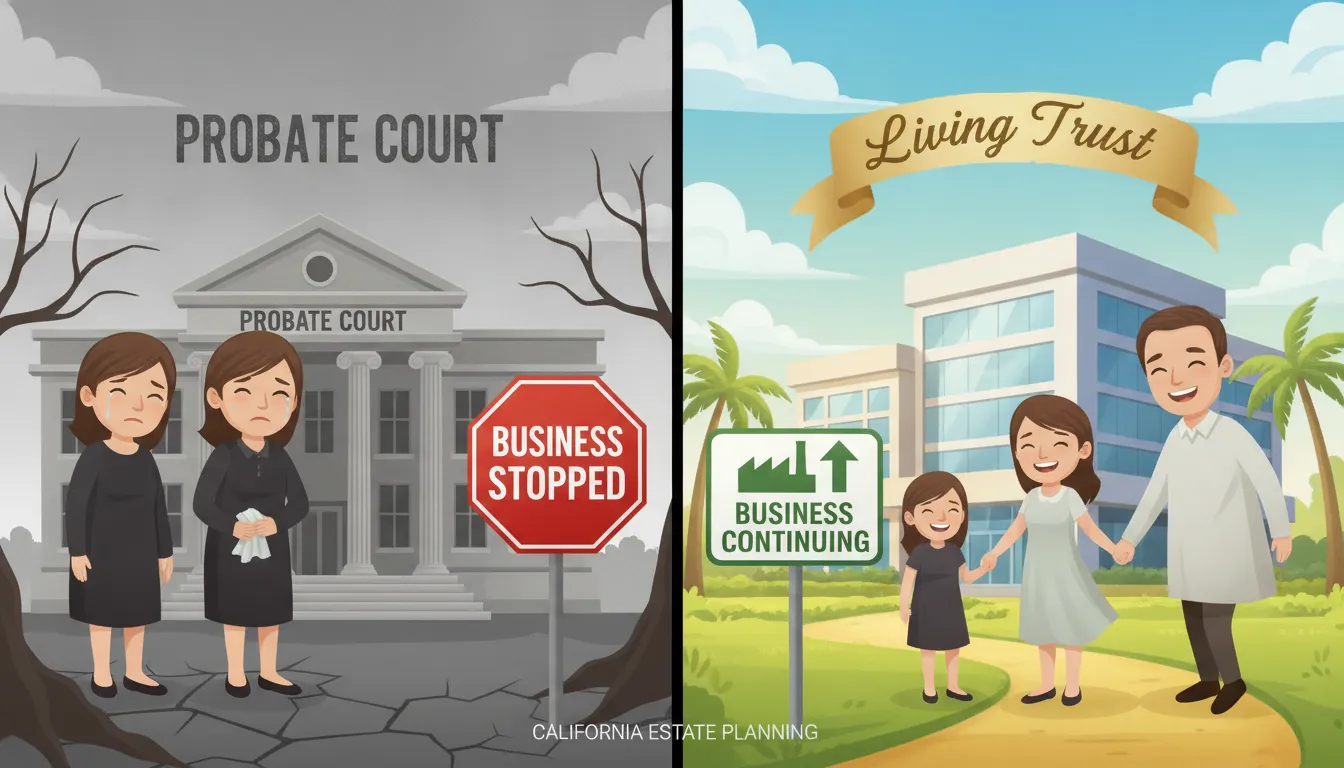
When you die with an LLC in your own name, your share of the business is seen as a personal asset. To pass this asset to your heirs, your estate must go through California probate court. This court process is very slow, public, and costly. The team at Lawvex knows that California probate often costs 5% to 7% of the total value of your estate.
The risk of frozen operations
While your estate sits in court, your business operations can freeze. The court process can take nine months or more. During this time, there may be no one with the legal right to sign checks, pay workers, or make sales. Banks often freeze business accounts once they learn of your death. This loss of control can quickly destroy the value of the firm you worked hard to build.
Operating agreement transfer limits
Your LLC’s operating agreement can also create issues. Many of these agreements have strict rules that limit who can take over your share. Some agreements do not allow heirs to become voting members without the consent of other partners. To understand these limits, we must review the contract between the members. According to a Pacific Law Journal study, these rules often restrict the transfer of membership interests.
Family conflict and loss of value
Without a clear plan, family members may fight over who runs the firm. Management disputes can lead to costly legal battles that drain your business assets. Proper business entity ownership in trust planning ensures that your business assets are governed by your trust, not a court. The team at Lawvex has seen how a living trust provides a smooth transition of power.
At Lawvex, we help business owners retitle their assets to keep their companies running. Placing your LLC into a revocable living trust is a standard strategy to avoid probate court control. By retitling your business interest, you make sure your company can keep running without delay. The trust document names a successor trustee who takes over right away if you die or cannot make choices. This simple step protects your wealth, keeps your business private, and secures a drama-free inheritance for your loved ones.
If you want to learn more about what happens during this legal process, read our guide on what to do when a loved one passes away and how to navigate estate matters with confidence.
How to Transfer Your LLC Membership Interest into a California Living Trust
Answer in brief: Moving your California LLC into a living trust is a simple process. You must review your business rules, sign an assignment paper, and update company records. Lawvex can help you with each step to protect your assets from probate.
Why business owners retitle assets
Can an LLC own a trust? While that is a common question, the real goal is usually the reverse. To secure your hard work, you should place your business interests into your personal trust. Under California business entity laws, moving your company rights is legal and common. Doing this ensures your business will keep running if you face illness or death. Lawvex has helped thousands of families protect their wealth with these steps.
Seven steps for California LLC transfer
You must follow a clear legal path when funding your trust with business interests. This process protects the legal shield of your LLC while moving ownership to your trust.
- First, you must check your LLC’s written contract. Many operating agreements restrict transfers to ensure other members agree with the changes. Check these rules first.
- Second, you must get the consent of other members if the contract requires it. You will need a signed vote or clear consent to proceed.
- Third, you must prepare an assignment of membership interest form. This paper acts as the deed that moves your business rights into the trust.
- Fourth, you will need to amend your LLC operating agreement. This update lists your living trust as a member and defines who controls the business.
- Fifth, file an updated Statement of Information with the state. You must file this form if the transfer changes who runs your daily business tasks.
- Sixth, update your private trust asset list, which is often called Schedule A. This page proves that your living trust now holds your LLC rights.
- Seventh, tell your banks, insurance firms, and vendors. You must tell these groups so they can update their business records and accounts.
Post-transfer business updates
Once you finish these steps, your trust is the legal owner of your LLC. But you still retain control as the trust manager. Lawvex helps business owners throughout California make this transition simple and stress-free. The Lawvex team can help you draft the proper forms to protect your legacy.
Not sure where to start with your business succession plan? Contact Lawvex today to discuss your options with an experienced estate planning attorney. We help California business owners protect their life’s work with clear, practical guidance.
Ready to move forward with your California estate plan? The Lawvex team can guide you through every step of transferring your business interests into a living trust. From reviewing your operating agreement to filing the final documents. Contact us today to get started.
Operating Agreement Provisions That Affect Trust Ownership of Your LLC
Answer in brief: Yes, a trust can own your LLC, but your business operating agreement has the final say. Many operating agreements have rules that limit how and when you transfer your shares to a trust. If you do not follow these rules, your trust might only get payouts without any voting power. You must check your business contract to make sure your estate plan works as intended.
When you plan for the future, you might ask, can an llc own a trust? The short answer is no, but a trust can hold your LLC shares. But you must check your firm rules first, as most LLCs have an operating agreement that governs transfer rights. At Lawvex, we help you review these contracts to ensure your transfer is valid and secure.
Member consent rules
Many firms require other members to agree before any transfer can happen. The LLC contract may say that most or all members must vote to approve a transfer to a trust. If you transfer your shares without this vote, the transfer might be void and lead to a major dispute. Our team at Lawvex checks these consent rules before drafting transfer papers.
Assignee versus member status
A major trap is the line between an assignee and a full member. Without member consent, your trust might only become an assignee with money rights but no voting power. To get full member rights, the other owners must vote to admit the trust as a member. We offer expert business succession planning services at Lawvex to help you avoid this exact trap.
Buy-sell terms and manager control
Your LLC contract may have buy-sell rules that force a sale of your shares if you try to move them. In California, you must read these contract terms closely before taking action. This need is noted in a study on business entity laws.
Also, the split between manager-managed and member-managed LLCs matters because in a member-managed firm, the transfer could shift voting power. Lawvex works with you to align your LLC rules with your trust goals to prevent family conflict.
California Tax Considerations When a Trust Holds Your LLC
Answer in brief: Placing a California LLC in a revocable living trust is tax-neutral during your lifetime because it is a grantor trust. But tax rules change when the owner dies, and property owners must watch out for real estate reassessment and federal estate tax limits.
Grantor trust status and death of the owner
Many business owners ask how taxes work when they put an LLC in a trust. You might wonder, can an llc own a trust? The answer is no, because a trust is a relationship, not an entity a business can own. Instead, the trust must hold the LLC interest.
If you use a revocable living trust, this setup is tax-neutral. All LLC profits and losses still flow to your personal tax return. You do not need to file a separate tax return for the trust.
But everything changes when the owner dies. At that moment, your revocable living trust becomes irrevocable. It is now a separate legal entity with new tax rules.
This shift means the trust must get its own employer identification number (EIN) from the government. The trustee must use this new number to report the LLC profits. Lawvex can help you navigate this transition so your family avoids errors. We make sure the business keeps running without tax delays.
California property tax reassessment risks
If your LLC owns real estate in California, you must be careful. Under Proposition 13 and Proposition 19, a transfer of LLC interests can trigger a property tax reassessment. This can happen if the transfer changes who controls the LLC. A reassessment could raise your property taxes by thousands of dollars each year.
Local attorneys often warn clients about these property tax risks. To protect your assets, you must comply with California business entity laws when you transfer your interest. The team at Lawvex knows how to draft these documents correctly. We make sure you do not trigger a surprise tax bill when funding your trust with business interests.
Federal estate tax guidance for 2026
Federal estate tax rules are also relevant for high-net-worth business owners. For 2026, the federal estate tax basic exclusion amount is $15 million per person. The amount is indexed for inflation in future years, but tax rules can change, so obtain current advice before making ownership or gifting decisions.
- 2026 basic exclusion amount: $15 million per person for estates of people who die in 2026.
- Planning point: The exclusion applies to the value of a person’s taxable estate, and a trust does not automatically eliminate federal estate tax.
- Plan ahead: High-value business owners should review ownership, beneficiary designations, and lifetime-gift strategies with qualified counsel.
If your business and personal assets are worth more than five million dollars, you face estate tax risks. Placing your LLC in a trust helps you plan for these changes. Lawvex can help you set up the right trust structure to protect your wealth. We offer fixed pricing and clear guidance to secure a drama-free inheritance for your family.
Building a Complete California Business Succession Plan Around Your LLC and Trust
A living trust helps pass your LLC to your heirs. But a trust is just one part of a full business succession plan. You must build a complete plan to protect your company, your family, and your wealth.
Answer in brief: A living trust holds your LLC, but multi-owner firms also need a buy-sell agreement. You must name a successor trustee with business skills and balance income for non-active heirs with control for active heirs. Lawvex integrates these tools to help your business survive for years.
The role of buy-sell agreements
For multi-owner LLCs, a trust holds your business but cannot control what happens if a partner dies. A buy-sell agreement paired with your trust allows other owners to buy out a deceased partner’s share, often funded with life insurance. When an owner dies, the policy pays cash to their trust, giving other owners full control. This protects the family and keeps surviving partners in control.
Without a solid plan, your business could face major conflict. Lawvex offers business succession planning services to help you align these tools. This ensures a clean transfer of power and avoids court battles.
Choosing successor trustees with business skills
When you put an LLC into a trust, you must name a successor trustee to manage it if you pass away. A spouse is a common choice for personal trusts, but running an LLC requires business skills. If your trustee does not understand your trade, they may struggle to manage staff or sign contracts.
Your trust should name a successor with business skills, or a co-trustee who only handles the business. At Lawvex, we know this tailored approach is a core part of incorporating business interests into your estate plan. It keeps your business running without a break in daily work.
Balancing management control and family income
Splitting business assets fairly among children can be a major hurdle. Giving equal shares of your LLC to active and non-active heirs often leads to drama. Active heirs may feel they do all the work, while others feel left out of the profits.
Research in the San Joaquin Agricultural Law Review shows that business owners need clear planning to deal with these split goals. A trust offers a structured path to pass control to your active successor over time. It can also give business income to other children, keeping the business in the family.
Most owners want to keep their business in the family. In fact, eighty-eight percent of family business owners expect their family to take over. Yet only thirty percent survive to the second generation without proper planning. Lawvex helps you beat these odds by blending business and estate plans to protect your legacy.
If you have questions about trust administration in California and how it works when a successor trustee takes over, Lawvex provides clear guidance every step of the way.
Ready to secure your California business assets?
Many business owners make the mistake of leaving their LLC out of their living trust. At Lawvex, we help you avoid this simple oversight to protect your life’s work and your family’s future. Without a trust, your company could end up stuck in probate court.
Probate is slow and expensive, and it can disrupt your business for months or even years. Your loved ones would face stress, high fees, and public court records. You can avoid all of this by setting up a solid estate plan today. Taking action now ensures your company continues to run without delay when life becomes uncertain. You will get clear guidance, total peace of mind, and a smooth path for the next generation.
Ready to protect your family and business? Call 1 (888) 308-7003 to schedule a free consultation with the Lawvex team today.
Frequently Asked Questions
Can an LLC own a trust?
No, an LLC cannot own a living trust. In estate planning, the trust is the entity that owns the LLC. A trust holds the membership interests of the LLC as an asset. This is a key step in funding your trust with business interests. This setup helps business owners protect their company and pass it on without probate court.
Can a trust own an LLC in California?
Yes, a revocable or irrevocable trust can hold LLC membership interests as an asset. According to Lawvex, this is a standard estate planning strategy to ensure business continuity and avoid probate. The trust becomes the legal owner of your business interests.
Does putting an LLC in a trust affect daily operations?
No, transferring your LLC to a revocable living trust does not change how you run your business. You still manage the LLC as the trustee. However, as noted in a study from the McGeorge School of Law, you must check your operating agreement first. Some agreements restrict transfer of interests.
How do you retitle an LLC into a California living trust?
To transfer your LLC, you must sign an assignment of membership interest form. You must also update your operating agreement to show the trust as the owner. California laws allow this change if you follow your company rules. You should work with Lawvex to ensure the transfer avoids probate and tax risks.