California Community Property Rules: What Every Married Couple Needs to Know
March 30, 2026

What Is Community Property?
California is one of only nine community property states in the nation, alongside Arizona, Idaho, Louisiana, Nevada, New Mexico, Texas, Washington, and Wisconsin. If you are married and living in California, the community property system directly affects how your assets are owned, divided, and ultimately passed on to your heirs.
In simple terms, community property means that most assets acquired during a marriage belong equally to both spouses, regardless of who earned the income or whose name appears on the title. This legal framework, rooted in California Family Code Section 760, has profound implications for estate planning, trust creation, and inheritance.
If you own a home or other significant assets in California and are married, understanding community property rules is essential before creating your estate plan. Learn more about Lawvex’s estate planning services to protect what matters most to your family.
Community Property vs. Separate Property in California
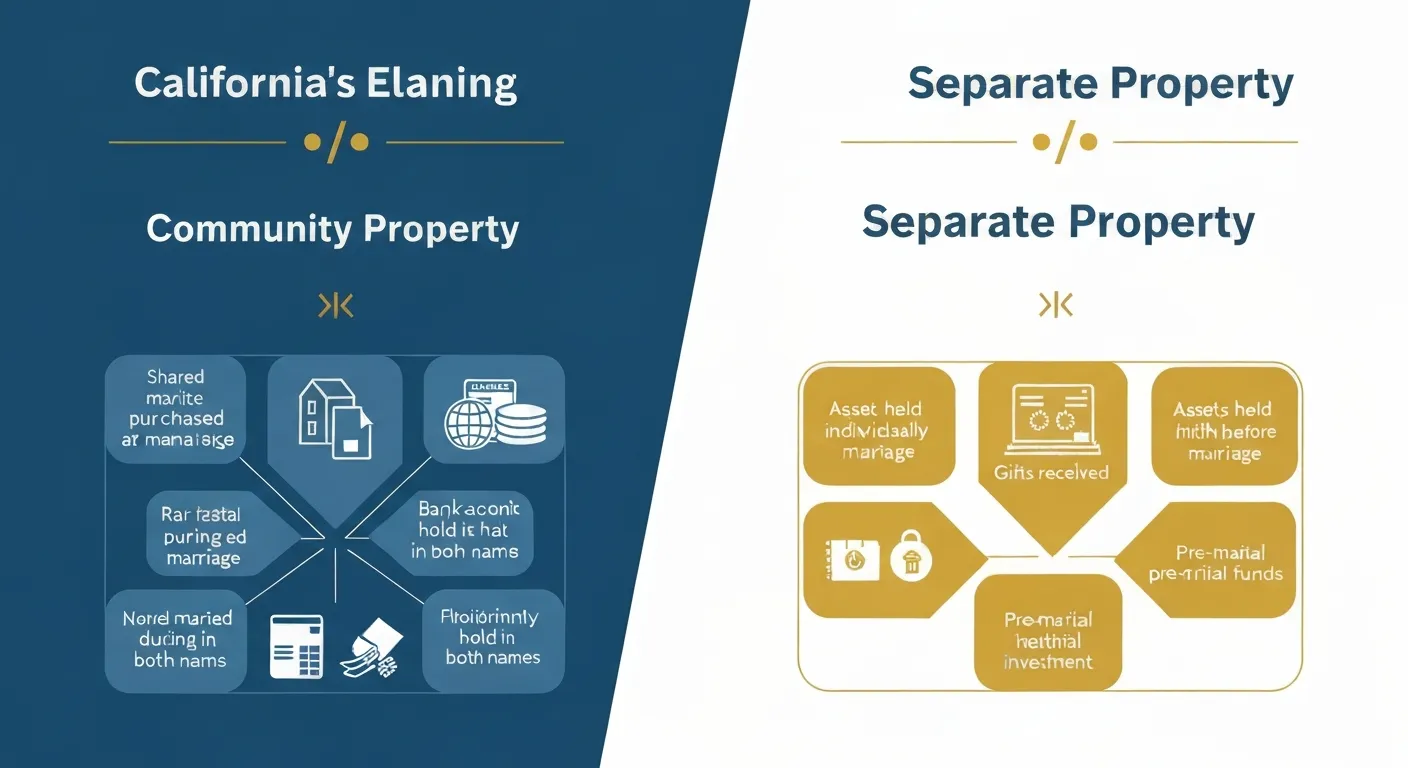
California law draws a clear line between two types of property ownership for married couples: community property and separate property. Getting this distinction right is one of the most important steps in estate planning.
What Counts as Community Property
Under Family Code Section 760, community property includes:
- Wages and salary earned by either spouse during the marriage
- Real estate purchased during the marriage, even if only one spouse’s name is on the deed
- Business income and assets generated during the marriage
- Retirement contributions made during the marriage (401(k), pension, IRA contributions)
- Investment returns on community property assets
- Vehicles, furniture, and personal property purchased with community funds
The presumption under California law is that any asset acquired during the marriage is community property unless proven otherwise. This means both spouses have an equal, undivided one-half interest in the asset.
What Counts as Separate Property
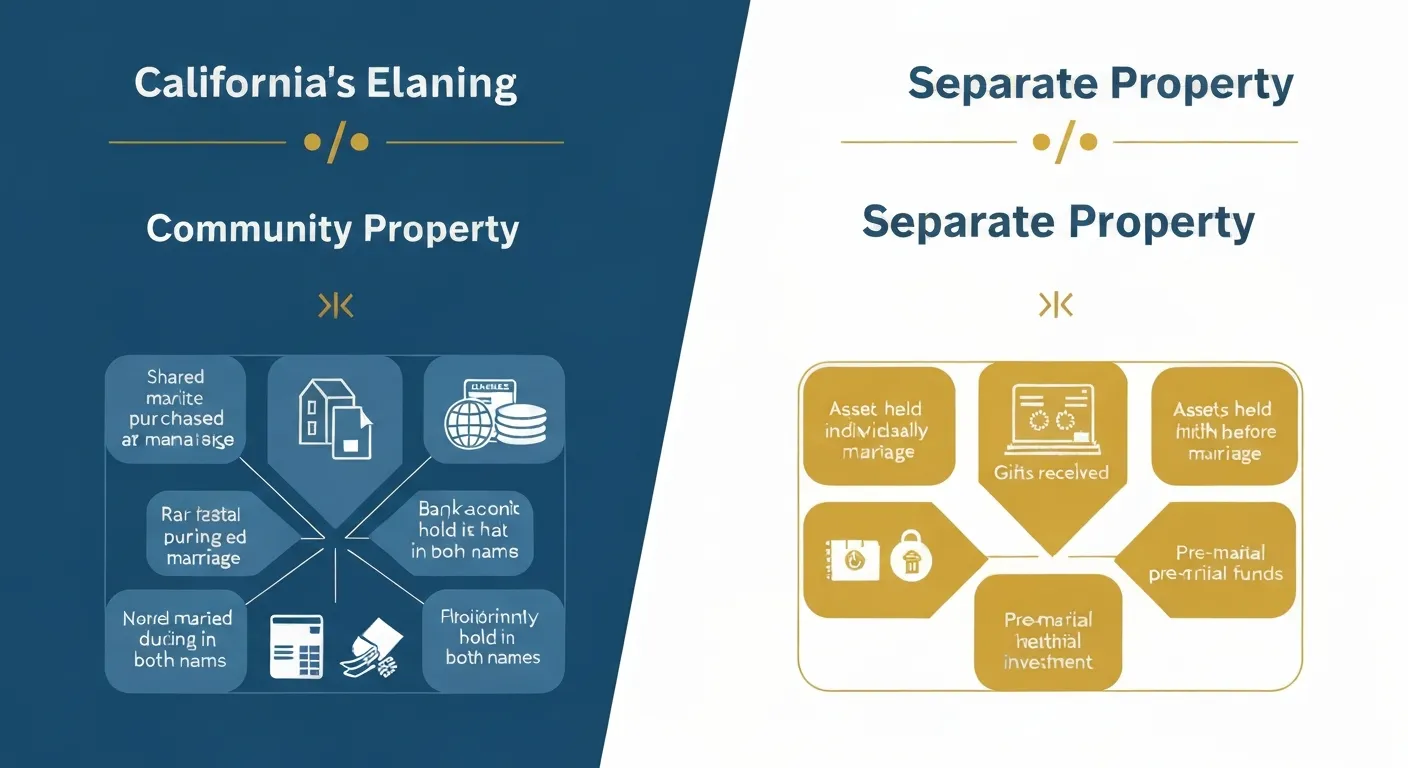
Separate property belongs exclusively to one spouse. Under Family Code Section 770, separate property includes:
- Assets owned before the marriage
- Gifts received by one spouse (even during the marriage)
- Inheritances received by one spouse
- Income earned from separate property (such as rent from a property owned before marriage)
- Assets acquired after legal separation
A critical point many couples overlook: an inheritance is separate property in California, but only if it is kept separate. If you deposit inherited funds into a joint bank account or commingle them with community assets, those funds may lose their separate property character under what is known as the commingling doctrine.
Why Community Property Rules Matter for Estate Planning
Community property classification affects nearly every aspect of your estate plan, from how assets are distributed after death to the tax consequences your heirs will face.
The Stepped-Up Basis Advantage
One of the most significant estate planning benefits of community property is the full stepped-up basis at death. Under Internal Revenue Code Section 1014(b)(6), when one spouse dies, the entire community property asset (not just the deceased spouse’s half) receives a new cost basis equal to the fair market value at the date of death.
Here is an example: A married couple purchased their home in Clovis for $300,000 twenty years ago. Today, the home is worth $800,000. If the home is held as community property and one spouse passes away, the entire property receives a new cost basis of $800,000. If the surviving spouse later sells the home for $850,000, they would owe capital gains tax on only $50,000, not on $550,000. In a common law state with joint tenancy, only the deceased spouse’s half would receive the stepped-up basis, resulting in potentially $275,000 more in taxable gains.
This is a major tax advantage compared to separate property or property held in common law states, where only the deceased spouse’s share receives a stepped-up basis. For California homeowners with significant appreciation, this can save surviving spouses tens or even hundreds of thousands of dollars in capital gains taxes if they decide to sell the property.
Community Property and Your Trust
When creating a revocable living trust, properly characterizing and funding community property into the trust is essential. Both spouses typically transfer their community property into a joint revocable trust or into their respective individual trusts.
Common mistakes include:
- Failing to fund the trust with community property assets, leaving them subject to probate
- Not specifying community property character in the trust document
- Accidentally converting community property to separate property through improper titling
- Overlooking quasi-community property (assets acquired in another state that would have been community property if acquired in California)
Working with an experienced estate planning attorney ensures your community property is properly identified, characterized, and transferred into your trust to avoid costly mistakes.
Community Property and Probate
If a spouse dies without a trust, community property may need to pass through California’s probate process. Under California Probate Code Section 100, the surviving spouse’s one-half of community property is not subject to probate, as it already belongs to them. However, the deceased spouse’s one-half interest may require probate proceedings unless it is held in a trust or qualifies for a simplified transfer.
California does offer a simplified procedure for the surviving spouse to confirm their community property rights without a full probate through a Spousal Property Petition under Probate Code Sections 13650-13660. This is faster and less expensive than a full probate proceeding, but it still requires a court filing.
Is Inheritance Community Property in California?
This is one of the most common questions California residents ask, and the answer is clear: no, an inheritance is generally separate property in California, even if received during the marriage. Family Code Section 770 explicitly classifies gifts and inheritances as separate property.
However, the separate property characterization can be lost through:
- Commingling: Depositing inherited funds into a joint bank account
- Transmutation: A written agreement changing the character of the property (Family Code Section 852)
- Improvement with community funds: Using marital income to improve or maintain inherited property
- Title changes: Adding your spouse to the title of inherited real estate
If you want to keep an inheritance as your separate property, the best practice is to maintain it in a separate account, keep careful records of the source, and consider a property characterization agreement with your spouse.
Quasi-Community Property: Assets from Other States
If you and your spouse moved to California from a common law state, you may have quasi-community property. Under Probate Code Section 66, quasi-community property includes real or personal property that is located anywhere, was acquired by a spouse while domiciled outside California, and would have been community property had the spouse been domiciled in California at the time of acquisition.

For estate planning purposes, quasi-community property is treated similarly to community property at death. The surviving spouse has the same rights to quasi-community property as they would to community property. This is particularly important for couples who relocated to California from states like Texas, New York, or Florida and brought significant assets with them.
One important distinction: quasi-community property is treated as community property only at death or divorce. During the marriage, while both spouses are alive, the acquiring spouse retains full management and control. This differs from true community property, where both spouses have equal management rights under Family Code Section 1100.
If you and your spouse relocated to California, whether to Clovis, Madera, Solvang, or anywhere else in the state, reviewing your existing assets with an estate planning attorney is an important first step. Properly classifying quasi-community property in your trust or will can prevent disputes and ensure the surviving spouse’s rights are protected.
Community Property Agreements and Transmutation
Spouses can change the character of their property through a transmutation agreement. Under Family Code Section 852, a transmutation of property is not valid unless it is made in writing by an express declaration that is made, joined in, consented to, or accepted by the spouse whose interest in the property is adversely affected.
Common transmutation scenarios in estate planning include:
- Converting separate property to community property to take advantage of the full stepped-up basis
- Converting community property to separate property for asset protection planning
- Creating a community property agreement for assets that might otherwise have unclear characterization
Any transmutation must meet the strict requirements of Section 852 to be valid. Verbal agreements are not sufficient, and the written declaration must be clear and unambiguous.
One increasingly popular strategy is converting separate property into community property solely for the stepped-up basis benefit. For example, if one spouse inherited a stock portfolio worth $100,000 that has now appreciated to $500,000, converting it to community property before the first death could save the surviving spouse significant capital gains taxes. However, this strategy carries risks, particularly in the event of divorce, and should only be pursued with professional legal guidance.
Practical Steps to Protect Your Community Property Rights
Whether you are newly married, approaching retirement, or updating an existing estate plan, these practical steps will help you protect your community property interests:
- Create or update your estate plan. A comprehensive estate plan should clearly identify community and separate property and include provisions for both.
- Keep separate property separate. If you receive an inheritance or have pre-marital assets, maintain them in separate accounts and avoid commingling.
- Document everything. Keep records of when assets were acquired, their source of funding, and any changes in title or ownership.
- Review beneficiary designations. Retirement accounts and life insurance policies should align with your community property rights and estate plan.
- Consider a community property agreement. For assets with unclear characterization, a written agreement can provide clarity and prevent disputes.
- Fund your trust properly. Ensure that community property assets are transferred into your revocable living trust to avoid probate.
- Consult with an attorney. Community property rules are complex, and mistakes can be expensive. Contact Lawvex to review your situation with an experienced estate planning attorney serving Clovis, Madera, and Solvang.
Frequently Asked Questions About Community Property in California
Is California a community property state?
Yes. California is one of nine community property states in the United States. Under California Family Code Section 760, most assets acquired during a marriage are presumed to be community property, owned equally by both spouses.
What happens to community property when a spouse dies?
The surviving spouse automatically retains their one-half interest in community property. The deceased spouse’s one-half can be distributed according to their will, trust, or California’s intestacy laws under Probate Code Section 6401.
Is an inheritance considered community property in California?
No. Under Family Code Section 770, inheritances are classified as separate property, even when received during the marriage. However, commingling inherited funds with community property can change their characterization.
What is the difference between community property and joint tenancy?
Community property is a form of ownership available only to married couples (or registered domestic partners) in community property states. Joint tenancy can be held by any two or more people. The key estate planning difference is that community property qualifies for a full stepped-up basis at death, while joint tenancy property only receives a stepped-up basis on the deceased owner’s share.
Can community property be held in a trust?
Yes. Transferring community property into a revocable living trust is one of the most effective ways to avoid probate while maintaining the community property character and its associated tax benefits. The trust document should explicitly state that the property retains its community property character.
How does community property affect estate taxes?
Community property provides a significant tax advantage through the full stepped-up cost basis at the first spouse’s death. Under IRC Section 1014(b)(6), the entire community property asset, not just the deceased spouse’s half, receives a new cost basis. This can dramatically reduce capital gains taxes for the surviving spouse.
Disclaimer: This article provides general educational information about California community property rules and estate planning. It is not legal advice and should not be relied upon as a substitute for consultation with a qualified attorney. Community property laws are complex, and individual circumstances vary. Please contact Lawvex to discuss your specific situation with an experienced estate planning attorney.
Lawvex serves families and businesses statewide throughout California through remote consultations.