Your Guide to a Durable Power of Attorney in CA
April 6, 2026

It’s one of the most common and dangerous estate planning myths: that being married automatically gives your spouse the right to manage all your finances if you become incapacitated. While you may share a joint bank account, assets like your 401(k), IRA, or real estate titled in your name alone are not automatically accessible. Without the right legal document, your spouse would need a court order to manage them. A durable power of attorney is the simple, private solution that grants this authority. It’s a critical tool for protecting your family and ensuring your partner can act immediately when needed.
For Madera County residents looking to put a complete estate plan in place—including powers of attorney—our Madera estate planning law firm offers a streamlined, fixed-fee process that covers all your essential documents.
What Is a Durable Power of Attorney in California?
A durable power of attorney (DPOA) is a legal document that allows you to appoint someone, known as your “agent” or “attorney-in-fact,” to manage your financial, legal, or healthcare affairs on your behalf. The key distinction of a durable power of attorney is that it remains valid even if you become mentally incapacitated. Under California Probate Code Section 4124, a power of attorney is durable when it includes language such as “This power of attorney shall not be affected by subsequent incapacity of the principal.”
Without a durable power of attorney, your family may need to petition the court for a conservatorship to manage your affairs if you become incapacitated. This process is time-consuming, expensive, and stressful for your loved ones. A DPOA is one of the most important components of any comprehensive estate planning strategy.
Need help creating a durable power of attorney? Contact Lawvex today to schedule a consultation with our estate planning team in Clovis, Madera, or Solvang.
Why a DPOA is Crucial, Even for Married Couples
It’s a common myth that marriage automatically gives your spouse the right to manage all your finances if you can’t. While you may share joint bank accounts, many significant assets are often held individually. Think about your 401(k), IRA, or even real estate titled in your name alone. Without a DPOA, your spouse would not have the legal authority to access or manage these assets. They would likely have to go through a public, costly, and emotionally draining court process to establish a conservatorship. A durable power of attorney is a simple, private document that prevents this difficult situation. It ensures your spouse or another trusted person can immediately step in to pay bills and manage your affairs, providing peace of mind for you both. This is a foundational part of a complete estate plan for couples of any age, because an unexpected illness or accident can happen to anyone.
Durable vs. General POA: Which One Do You Need?
California law recognizes several types of powers of attorney, and understanding the differences is essential for proper estate planning.
A general power of attorney grants broad authority to your agent but automatically terminates if you become incapacitated. This makes it useful for temporary situations, such as having someone manage your finances while you travel, but inadequate for long-term planning.
A durable power of attorney continues to be effective even after the principal becomes incapacitated. This is the critical difference. When you can no longer make decisions for yourself, a durable POA ensures your designated agent can step in without court intervention.
A springing power of attorney is a type of durable POA that only becomes effective when a specific event occurs, typically the principal’s incapacity as certified by a physician. California Probate Code Section 4129 allows for springing powers of attorney, though they can sometimes cause delays because agents must first prove the triggering condition has been met.
The Two Main Types of California DPOAs
For Your Finances and Property
A durable financial power of attorney authorizes your agent to handle monetary and property matters on your behalf. Under California Probate Code Section 4264, your agent may be authorized to perform actions including:
- Managing bank accounts and investment portfolios
- Paying bills, taxes, and debts
- Buying, selling, or managing real estate
- Filing tax returns
- Managing business interests
- Handling insurance claims
- Making gifts (if specifically authorized)
California law requires that certain powers be specifically enumerated in the document. For example, your agent cannot make gifts, create or modify trusts, or change beneficiary designations unless the DPOA expressly grants that authority (Probate Code Section 4264(a)).
For Your Healthcare Decisions
A durable power of attorney for healthcare, also called an advance healthcare directive, authorizes your agent to make medical decisions when you cannot do so yourself. California’s Health Care Decisions Law (Probate Code Sections 4600-4806) governs these documents. Healthcare decisions your agent may make include:
- Consenting to or refusing medical treatments
- Choosing healthcare providers and facilities
- Accessing your medical records
- Making end-of-life care decisions
- Authorizing organ donation
California law allows you to include specific instructions about your healthcare preferences directly in the document, providing guidance to your agent when difficult decisions arise.
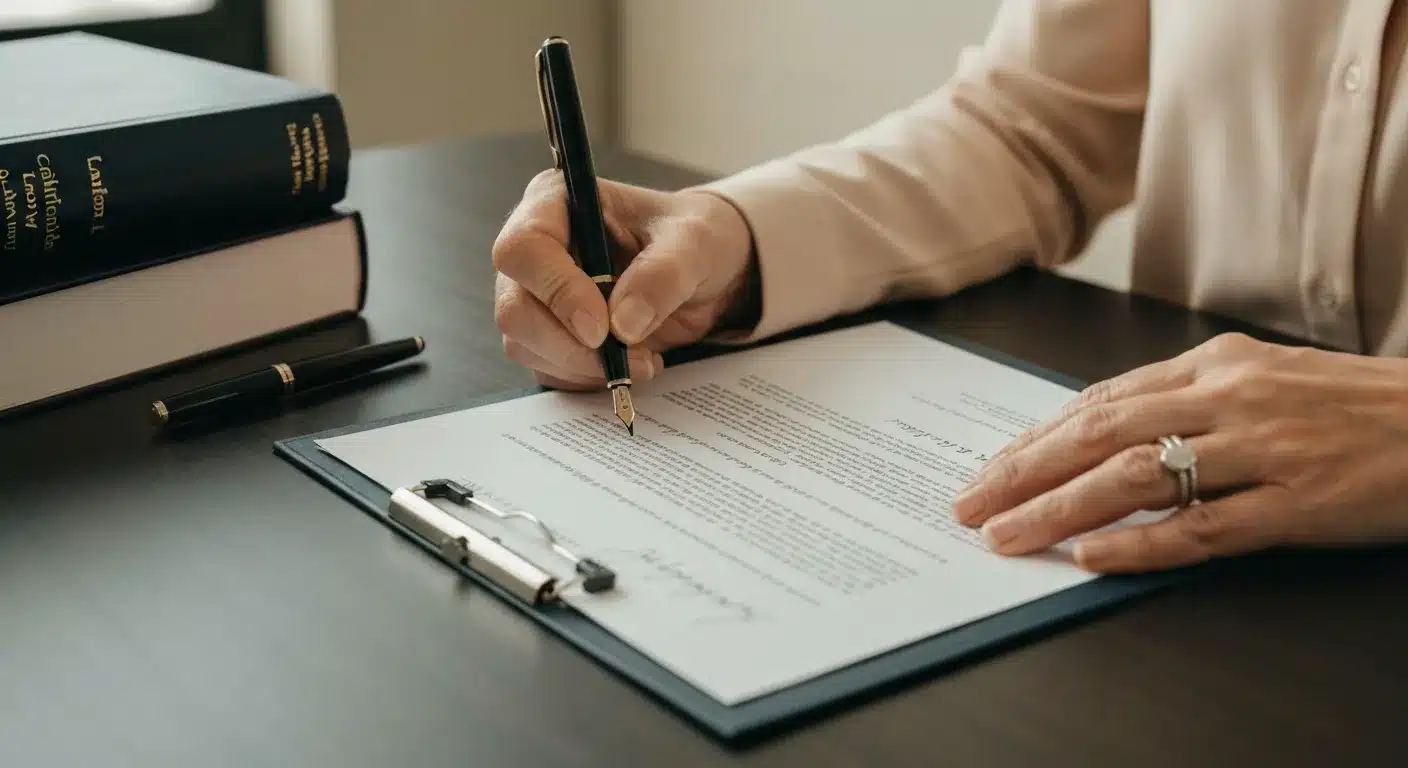
What Makes a Durable POA Legally Valid in California?
For a durable power of attorney to be legally valid in California, it must meet several requirements established by the Probate Code:
- Written document. The POA must be in writing (Probate Code Section 4121).
- Principal’s signature. The principal (person granting the power) must sign the document or direct someone else to sign on their behalf in their presence.
- Durability language. The document must contain a statement indicating that the authority granted shall not be affected by the principal’s subsequent incapacity (Probate Code Section 4124).
- Notarization or witness requirements. For a financial DPOA, notarization is strongly recommended and required by many financial institutions. For a healthcare DPOA, either notarization or signing by two qualified witnesses is required (Probate Code Section 4673).
- Date of execution. The document must include the date it was signed.
- Mental capacity. The principal must have the legal capacity to execute the document at the time of signing.
Using the California statutory form for power of attorney (Probate Code Sections 4400-4409) is not required, but it provides a reliable framework that financial institutions and healthcare providers readily accept.
How to Set Up Your Durable Power of Attorney in California
Creating a valid durable power of attorney in California involves several important steps. While it is possible to prepare these documents using statutory forms, working with an experienced estate planning attorney ensures the document accurately reflects your wishes and meets all legal requirements.
Step 1: How to Choose a Trustworthy Agent
Selecting the right agent is the most important decision in this process. Your agent should be someone you trust completely, who is financially responsible, and who understands your values and preferences. Consider naming a successor agent in case your first choice is unable or unwilling to serve.
Discussing Responsibilities with Your Potential Agent
This isn’t a role you should spring on someone. Once you have a person in mind, sit down and have an open conversation about what being your agent entails. It’s crucial to talk about your wishes and their responsibilities before you sign any documents. Explain that they will have a fiduciary duty to you, which is a legal obligation to act in your best interest and follow your instructions. They must also keep detailed records of every action taken on your behalf. This conversation ensures they are willing and able to take on this significant role and that you are both on the same page about your financial and healthcare preferences.
Considering a Professional Fiduciary or Trust Company
What if you don’t have a family member or friend who is a good fit? That’s perfectly okay. Many people choose to appoint a professional fiduciary or a trust company as their agent. These are licensed professionals or institutions that specialize in managing financial affairs. While they charge a fee for their services, they offer impartiality, expertise, and can help prevent conflicts among family members. You can choose any adult or a bank to be your agent, and for some, a professional is the most trustworthy option. An experienced attorney can help you explore whether this is the right choice for your situation and connect you with reputable professionals in areas like Clovis, Madera, or Solvang.
Step 2: Decide What Powers to Grant Your Agent
Decide exactly what powers you want to grant. California allows you to grant broad authority or limit your agent to specific tasks. Be explicit about any special powers, such as the ability to make gifts, handle real estate transactions, or manage business operations.
Step 3: Put It in Writing
Work with a qualified estate planning attorney to draft the DPOA. While California provides a statutory form (Probate Code Section 4401), many attorneys create custom documents tailored to each client’s specific needs and circumstances.
Step 4: Sign and Finalize Your DPOA Correctly
Sign the document in the presence of a notary public and/or two qualified witnesses, depending on the type of POA. For financial DPOAs, notarization is the standard practice. For healthcare DPOAs, either notarization or two witnesses will satisfy the legal requirements.
Ensuring Your Agent Formally Accepts the Role
Simply naming someone as your agent isn’t the final step—they have to officially accept the job. Before you finalize anything, it’s essential to have a frank conversation with your chosen agent about your wishes and their responsibilities. This isn’t a role to spring on someone; it’s a significant commitment, and you need to know they are truly willing and able to step in for you. In California, your agent must also sign a paper agreeing to their duties before they can legally act on your behalf. This discussion and formal acceptance ensure they understand your values and are prepared to honor them, making it a crucial part of a comprehensive estate plan.
Step 5: Share Copies Where They’re Needed
Provide copies to your agent, successor agents, financial institutions, healthcare providers, and your attorney. Keep the original in a secure but accessible location.
Lawvex helps families throughout California, with remote consultations available statewide, create comprehensive estate plans that protect their interests. Schedule a consultation at our offices in Clovis, Madera, or Solvang to discuss your power of attorney needs.
When Does a Durable Power of Attorney Take Effect?
A durable power of attorney can take effect in two ways:
Immediately upon execution. Most financial DPOAs become effective as soon as they are signed. This means your agent can act on your behalf right away, even while you are fully capable. You retain the right to manage your own affairs and can revoke the POA at any time while you have capacity.
Upon a triggering event (springing POA). A springing DPOA only becomes effective when a specified condition is met, typically the principal’s incapacity as determined by one or two physicians. While this approach offers peace of mind for those uncomfortable with granting immediate authority, it can create practical challenges. Financial institutions may require proof of incapacity before honoring the document, which can delay access to accounts during a critical time.

Defining “Incapacity” Under California Law
In California, “incapacity” is a legal determination that someone is unable to make informed decisions about their personal, financial, or healthcare matters. This can stem from conditions like dementia, a severe accident, or other cognitive impairments. This definition is critical because incapacity is often the event that activates a durable power of attorney. Without a DPOA, your family may be forced to petition the court for a conservatorship to manage your affairs—a process that is often time-consuming, public, and expensive. Defining incapacity in your plan is key to protecting your autonomy.
For a “springing” power of attorney, which only becomes effective upon a specific event, this definition is vital. Your document can specify exactly how incapacity should be determined, such as by a written declaration from one or two physicians. Outlining this process helps avoid family disputes and ensures your agent can act without delay. At Lawvex, we help clients articulate these details precisely, ensuring their wishes are honored and their agents are empowered to act swiftly when needed.
What Are an Agent’s Responsibilities in California?
An agent appointed under a durable power of attorney has significant legal obligations under California Probate Code Sections 4230-4238. Understanding these duties is essential for both principals and agents. For a deeper look at fiduciary responsibilities, see our guide on what happens when it is time to act as an agent.
Acting in Your Best Interest
Your agent owes you a fiduciary duty, the highest standard of care recognized by law. This includes the duty of loyalty (acting in your best interest, not their own), the duty of care (making prudent decisions), and the duty to keep your property separate from their own.
Keeping Clear and Honest Records
Your agent must maintain complete and accurate records of all transactions conducted on your behalf. This includes receipts, bank statements, investment records, and any other documentation related to your financial affairs. These same obligations apply to agents serving under trust administration in California.
Following Your Expressed Wishes
Your agent must follow any specific instructions you included in the DPOA. If the document limits their authority to certain transactions, they cannot exceed those boundaries.
The Consequences of Misusing Power
California law provides remedies if an agent abuses their authority. Under Probate Code Section 4231.5, an agent who violates their fiduciary duties may be liable for damages, and any interested person may petition the court to review the agent’s actions.
Changing Your Mind: How to Revoke a California DPOA
You may revoke a durable power of attorney at any time, provided you have the mental capacity to do so. California Probate Code Section 4151 outlines the revocation process:
- Written revocation. Prepare a written notice of revocation, have it notarized, and deliver it to your agent and any third parties who may have relied on the original POA.
- Destruction of the document. Physically destroying the original document can serve as revocation, though written notice to your agent is still recommended.
- Execution of a new POA. Creating a new power of attorney that expressly revokes all prior POAs is the most thorough approach.
Note that revocation only becomes effective when your agent receives actual notice. If you revoke the document but your agent does not know, actions they take in good faith may still be valid.
Automatic Termination of a DPOA
While a durable power of attorney is designed for longevity, it doesn’t last forever. It’s a tool for managing your affairs while you are alive, and its authority automatically ends under specific circumstances. The most common trigger for termination is the death of the principal. Once you pass away, the DPOA is no longer valid, and your will or trust takes over to guide the distribution of your assets through processes like trust administration or probate. A DPOA can also end if you, the principal, decide to revoke it while you still have the mental capacity to do so. Other automatic termination events include a court appointing a conservator to manage your estate, or if a specific condition written into the document itself is met, such as reaching a predetermined end date.
What Happens if Your Agent Can No Longer Serve?
Life is unpredictable, and the person you choose as your agent may not be able to serve when the time comes. They could pass away, become incapacitated themselves, or simply be unwilling to take on the responsibility. This is why a thoughtfully prepared estate plan never stops at naming just one agent. The best practice is to name at least one or two successor agents who can step in if your primary choice is unavailable. Think of it as having a backup plan for your backup plan. Without a designated successor, your family might be forced into a court process to appoint a conservator, which is exactly the situation a DPOA is meant to avoid. Naming successors ensures a seamless transition and that someone you trust is always ready to act on your behalf.
The Impact of Divorce on Your DPOA
If you named your spouse as your agent, it’s critical to understand what happens if your marriage ends. In California, the law provides an automatic safeguard: if you get divorced or your marriage is legally annulled, your ex-spouse’s authority as your agent is automatically terminated. While this is a helpful protection that prevents a former spouse from controlling your affairs, it can also leave a significant gap in your plan if you haven’t named a successor agent. This is a powerful reminder that your estate plan is not a “set it and forget it” document. It’s essential to review and update your DPOA and other estate planning documents after any major life event, including marriage, divorce, the birth of a child, or the death of a loved one, to ensure they still reflect your wishes.
Common DPOA Mistakes (And How to Avoid Them)
Based on our experience working with families across Clovis, Madera, and Solvang, these are the most common mistakes people make with durable powers of attorney:
- Waiting too long. You must have mental capacity to create a DPOA. If you wait until a health crisis occurs, it may be too late.
- Choosing the wrong agent. Selecting someone based solely on family relationship rather than their ability and willingness to serve can lead to problems.
- Not being specific enough. Vague language can create confusion about your agent’s authority. Clearly enumerate the powers you wish to grant.
- Failing to update the document. Life changes such as divorce, death of an agent, or significant financial changes should prompt a review of your DPOA.
- Not providing copies to financial institutions. Banks and investment companies may refuse to honor a POA they have not reviewed in advance. Provide copies to your financial institutions while you are still capable.
- Using online templates without legal review. Generic forms may not comply with California-specific requirements or address your particular circumstances. An experienced attorney can ensure your estate planning documents are comprehensive and valid.
Not Planning for Potential Family Conflict
Money and family can be a complicated mix, and a durable power of attorney can sometimes stir the pot. When you give one person control over your finances, it’s natural for others to feel left out, jealous, or even suspicious. This can lead to arguments or, in worst-case scenarios, lawsuits that pit family members against each other. The best way to avoid this is to be proactive. Having an open conversation with your family about why you chose a specific agent can clear the air. It’s also wise to build a comprehensive estate plan that clearly outlines your wishes, leaving no room for misinterpretation and helping to preserve family harmony long after you’ve made these important decisions.
Using an Outdated or Generic Document
In an effort to save time or money, it’s tempting to download a generic power of attorney form from the internet. This is one of the riskiest mistakes you can make. These one-size-fits-all documents often fail to comply with California’s specific legal requirements or address your unique family and financial situation. An outdated DPOA from years ago is just as dangerous, as laws change and your life circumstances evolve. An experienced attorney ensures your documents are not only legally valid but also customized to your life. At Lawvex, we help clients create tailored plans that provide true protection, something a generic form can never offer.
Misunderstanding the Lack of Court Supervision
One of the biggest benefits of a DPOA is that it avoids court involvement, saving your family time and money. However, this is also its biggest risk. Unlike a court-appointed conservator, your DPOA agent isn’t automatically supervised by a judge. They can access bank accounts, sell property, and make critical decisions without needing a court’s permission. This freedom is why absolute trust in your agent is non-negotiable. If your agent doesn’t act in your best interest, the damage can be significant before anyone even notices. Building safeguards and clear limitations into the document is essential, reinforcing just how critical it is to get professional guidance when creating this powerful legal tool.
Frequently Asked Questions About Durable Power of Attorney in California
How much does a durable power of attorney cost in California?
The cost varies depending on whether you use a statutory form or work with an attorney. Attorney-drafted DPOAs typically cost between $200 and $500 when prepared as part of a comprehensive estate plan. Notarization fees are additional. Considering the protection a properly drafted DPOA provides, the investment is well worth it. For information about related costs, see our guide on California probate fees, which explains the expenses families face when proper planning is not in place.
Can I have both a financial and healthcare durable power of attorney?
Yes, and most estate planning attorneys recommend having both. They serve different purposes and can name different agents. A financial DPOA covers your property and monetary affairs, while a healthcare DPOA (advance directive) covers medical decisions.
Does a durable power of attorney expire in California?
A durable power of attorney does not automatically expire unless the document includes a specific expiration date. It remains in effect until you revoke it, you pass away, or a court terminates it. Death automatically terminates all powers of attorney.
Can I limit what my agent can do?
Absolutely. California law allows you to customize your DPOA to grant as much or as little authority as you wish. You can limit your agent to specific transactions, set spending limits, require reporting, or impose any other reasonable restrictions.
What happens if I do not have a durable power of attorney and become incapacitated?
Without a DPOA, your family must petition the court for a conservatorship to manage your affairs. This process requires court hearings, legal fees, and ongoing court supervision. It can take months and cost thousands of dollars, a situation that proper estate planning can help you avoid entirely.
Can my agent change my will or trust?
Generally, no. A power of attorney does not authorize your agent to create, amend, or revoke your will. However, if the DPOA specifically grants the power to amend or revoke a trust, your agent may be able to make trust modifications. This is an area where careful drafting by an experienced attorney is essential.
Is a durable power of attorney valid in other states?
Most states recognize out-of-state powers of attorney, but requirements vary. If you own property in multiple states, your estate planning attorney may recommend creating state-specific documents to ensure compliance with local laws.
Can multiple people serve as my agent?
Yes, California allows you to appoint co-agents who must act together, or you can authorize them to act independently. However, naming co-agents can create practical challenges if they disagree. Many estate planners recommend naming a single primary agent with a successor agent as backup.
Protect your future and your family’s peace of mind with proper estate planning. Contact Lawvex to create your durable power of attorney with guidance from our experienced team in Clovis, Madera, or Solvang.
Legal Disclaimer
This article provides general educational information about durable powers of attorney in California. It is not legal advice and does not create an attorney-client relationship. Laws change frequently, and individual circumstances vary. Consult a qualified estate planning attorney for guidance on your specific situation. The information in this article is current as of the date of publication.
Key Takeaways
- Marriage isn’t a substitute for a DPOA: Your spouse cannot automatically access or manage your individual assets, like a 401(k) or solely owned property, if you become incapacitated. A durable power of attorney is the specific legal document needed to grant this authority and avoid a public court process.
- Your agent choice is the most critical decision: Select a trustworthy and responsible person to act as your agent, as they will have significant control over your affairs without court supervision. It is vital to discuss your wishes with them and name at least one successor agent as a backup.
- Proper legal drafting prevents future problems: A valid DPOA must meet specific California requirements, including being a written document with durability language that is correctly signed and notarized. Using generic templates is risky; professional guidance ensures your document is customized, legally sound, and helps prevent family conflict.