Community Property Trust California Guide
May 17, 2026
Community Property Trust California Guide for Married Homeowners
A community property trust in California can sound like a tax shortcut, but married homeowners usually need a more careful answer. The key questions are whether the assets are truly community property, whether the trust wording preserves that treatment, and how the plan fits a couple’s broader estate goals. A trust can organize ownership and administration, but it does not automatically turn separate property into community property or guarantee a specific tax result.
If you are comparing trust structures for a California home or other appreciated assets, review Lawvex estate planning services and schedule a strategy discussion before changing titles or trust language.
This guide explains what people often mean by a California community property trust, how community property treatment relates to income tax basis planning, where revocable trust discussions can become misleading, and when a couple should get legal advice. It is written for spouses who own a California residence, rental property, or other appreciated assets and want a plan that is coordinated, not generic.
What is a community property trust in California?
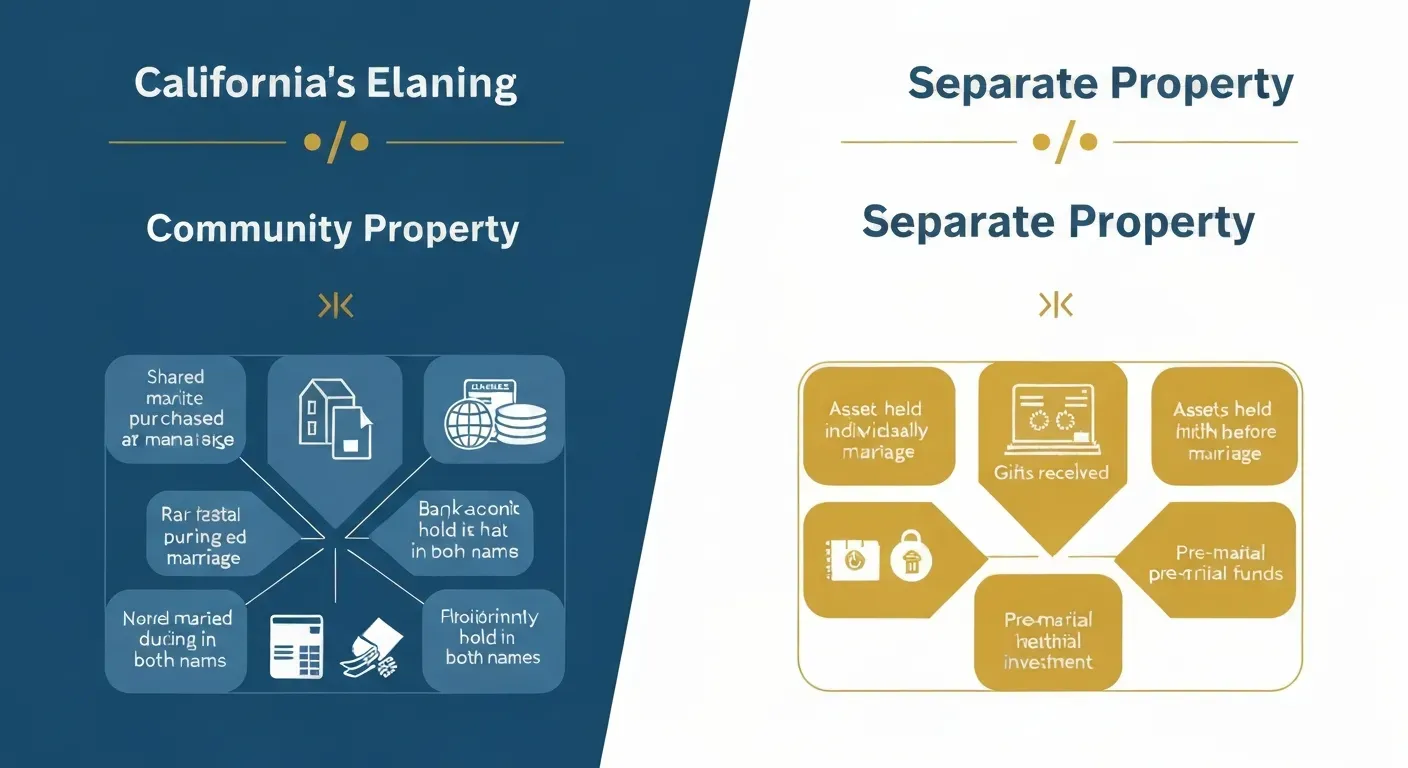
In California planning conversations, a “community property trust” often refers to a joint revocable living trust for spouses that identifies community property as community property while the couple is alive and directs how it should be managed at incapacity or death. California is already a community property state. That means the label on a trust is not the whole analysis. The source of the asset, any transmutation agreement, how title is held, and the trust terms all matter.
A married couple may use one joint revocable trust for community assets, separate trusts for separate property, or a plan that uses both approaches. The right structure depends on facts that a form cannot infer. For example, a home purchased during marriage with community earnings raises different questions than a premarital home that was later refinanced, improved with marital funds, or retitled.
Lawvex has already explained the broader ownership rules in its guide to California community property. This article takes the narrower next step: how community property characterization can interact with trust design and basis planning for married couples.
How community property treatment can affect basis planning
Many couples ask about a community property trust in California because they have heard about a “double step-up in basis.” Basis is generally the value used to measure gain or loss when property is later sold. Under federal tax rules, appreciated community property may receive an adjusted basis at the first spouse’s death for both halves of qualifying community property, not only the deceased spouse’s share. That can matter if the survivor later sells the home or another appreciated asset.
The planning point is important, but it should not be overstated. Whether a full basis adjustment is available depends on federal tax rules, ownership facts, documentation, and the asset’s character at death. It is not created by putting the words “community property” in a trust title. If an asset was separate property, was not properly characterized, or presents mixed-source tracing issues, the expected result may not follow.
Documentation matters before and after a plan is signed. Deeds, trust schedules, account statements, and records showing how a property was acquired can help advisors determine what analysis is even possible. Couples who wait until a sale, refinance, or death in the family may find that the documents they need are scattered or unclear.
Consider a simplified example. A married couple buys a California home during marriage with community earnings and transfers it into a well-drafted revocable trust that preserves community property characterization. If one spouse dies after the home has appreciated, their attorney and tax advisor may analyze whether community property basis rules apply before the survivor sells or refinances. That analysis is different from claiming the trust itself eliminates tax.
Mid-planning checkpoint: For a home, rental, or investment account with significant appreciation, ask Lawvex to review how ownership, trust wording, and tax questions fit together before relying on an assumed basis outcome.
Does a trust override community property rules?
No. A revocable trust is usually an estate planning container, not a magic eraser for California marital property rules. Searchers frequently ask whether a trust overrides community property in California because the terms “trust ownership” and “marital ownership” sound like competing systems. In practice, they address different issues.
- Community property characterization addresses the spouses’ ownership interests under California law.
- Trust title addresses how legal title is held and how assets can be managed under the trust agreement.
- Trust distribution terms address what happens at incapacity or death, subject to applicable law and valid property rights.
A spouse generally should not assume that transferring an asset into a trust changes separate property into community property, cuts off the other spouse’s rights, or resolves a disputed tracing issue. California requires careful treatment of agreements that change marital property characterization. That is one reason couples should not treat internet summaries as instructions for retitling valuable assets.
Community property trust vs. a general joint revocable trust
The phrase “community property trust” is sometimes used loosely to describe any joint trust for spouses. That can be confusing. A generic joint revocable trust may help with probate avoidance and successor trustee administration, but it may not clearly preserve community property characterization for every asset. A tailored California plan should identify what is community, what is separate, and what should happen to each category.

| Planning question | Why it matters | What to review |
|---|---|---|
| Is the asset community or separate property? | Characterization influences ownership rights and may affect tax analysis. | Purchase history, source of funds, inheritance or gift records, agreements, title. |
| Does the trust preserve the intended characterization? | Trust language should align with the couple’s facts, not contradict them. | Schedules, property clauses, and attorney-drafted characterization language. |
| What happens after the first spouse dies? | Survivor control, administration, and basis review may all arise at once. | Successor trustee powers, survivor rights, and tax-advisor coordination. |
| Are there blended family or creditor concerns? | Those goals may call for a different structure than an all-purpose joint trust. | Beneficiary design, protection goals, and whether subtrust planning is appropriate. |
If you need a broader refresher on California trust setup, Lawvex’s guide on how to set up a trust in California explains trustees, funding, and signing steps. The distinction here is that community property planning adds marital property and tax-characterization questions on top of those basics.
When married California homeowners should consider this discussion
A community property trust conversation is most useful when a couple has a practical reason to coordinate ownership, administration, and tax awareness. It may be worth raising with counsel in situations such as these:
- You and your spouse own a California home that has appreciated substantially.
- You hold rental property, brokerage assets, or a family residence acquired during marriage.
- One spouse brought property into the marriage, and you need to separate facts from assumptions before planning.
- You moved to California from a non-community-property state and are unsure how older assets fit the current plan.
- You have a blended family, unequal intended distributions, or survivor-control concerns that make a basic form trust risky.
- You want your estate plan to address probate avoidance without making unsupported tax promises.
Real estate investors often face an extra layer of complexity because rental properties may involve depreciation, entities, title history, and business succession goals. Lawvex’s guide to estate planning for real estate investors and landlords can help frame those related issues.
What a community property trust does not automatically do
Careful planning begins with eliminating common myths. A trust can be valuable, but a married couple should not assume it does any of the following without fact-specific legal and tax review:
- Convert inherited or premarital separate property into community property without a valid, intentional change.
- Guarantee a full basis adjustment for every asset at the first death.
- Eliminate capital gains tax in all future sale scenarios.
- Override valid marital property rights or cure a title dispute by itself.
- Replace beneficiary designations, account titling, deeds, or trust funding work.
- Solve creditor, Medi-Cal, or advanced asset protection questions merely because the trust is revocable.
These limits matter because California married couples often research trusts while trying to avoid probate, protect a surviving spouse, and make future administration less stressful. Those are reasonable goals. The risk is folding several goals into one oversimplified phrase and then executing documents that do not match the household’s actual assets.
How this differs from general revocable trust content
A standard article on revocable trusts usually covers probate avoidance, naming successor trustees, privacy, incapacity planning, and funding assets. This topic is narrower. A community property trust California searcher is asking how spousal property characterization changes the planning conversation, especially for homeowners concerned about appreciated assets and first-death basis questions.
That is also why a direct comparison with irrevocable trusts can be misleading. Irrevocable structures may serve asset protection, tax, or benefit-planning objectives in some cases, while a spouse-centered community property discussion usually starts with revocable estate planning and accurate asset characterization. Couples weighing those categories can read Lawvex’s overview of revocable and irrevocable trusts in California, then bring specific questions to counsel.
Ready to move from internet research to a fact-specific plan? Schedule a Lawvex estate planning strategy session to discuss your home, trust structure, and questions for tax coordination.
Questions to bring to an estate planning consultation
A useful consultation is easier when couples arrive with documents and focused questions. Consider gathering deeds, current trust documents, account statements for major appreciated assets, prenuptial or postnuptial agreements if any, and records showing whether an asset was inherited or acquired before marriage. Then ask questions such as:
- Which assets in our plan are clearly community property, clearly separate property, or potentially mixed?
- Does our current trust state the intended property characterization accurately?
- Would one joint trust, separate trusts, or a combined structure better fit our goals?
- What basis-planning questions should we coordinate with our tax advisor?
- If one spouse dies first, what administration steps should the survivor expect?
- Do any real estate, beneficiary designation, or funding changes need to accompany the trust?
The attorney’s role is to align documents with California law, the couple’s goals, and the assets they actually own. A tax professional may also be needed when basis consequences, depreciation history, planned sales, or capital gains questions are central to the decision.
Frequently asked questions
Is a community property trust available in California?
California spouses can use revocable trust planning that identifies and preserves community property treatment where appropriate. The exact structure and language should be tailored to the couple’s assets and goals rather than copied from a generic form.
Does a community property trust guarantee a double step-up in basis?
No. Community property basis treatment can be valuable, but the result depends on federal tax law and the facts showing that the asset qualifies as community property at the relevant time. A trust label alone does not guarantee the outcome.
Can a trust change separate property into community property?
Not automatically. Spouses who intend to change property characterization need legal guidance on California’s requirements and the consequences of that change. Moving an asset into a trust without that review can create confusion instead of clarity.
Should every married homeowner use a community property trust?
No. Many married homeowners benefit from coordinated revocable trust planning, but the right structure depends on title history, property character, family goals, and tax questions. A consultation is the right place to compare options.
Bottom line for California couples
A community property trust in California is best viewed as a focused planning conversation, not a one-size-fits-all product. For married homeowners, the value lies in coordinating property characterization, trust administration, and basis awareness without exaggerating what any document can promise. If your estate includes an appreciated home, mixed property history, rental real estate, or a blended family, careful review now can prevent avoidable confusion later.
Talk with Lawvex about California estate planning when you want trust documents that match your marriage, your assets, and your long-term inheritance goals.